Number of Ways of Cutting a Pizza

Given a rectangular pizza represented as a rows x cols matrix containing the following characters: 'A'(an apple) and '.'(empty cell) and given the integer k. You have to cut the pizza into k pieces using k-1 cuts.

For each cut you choose the direction: vertical or horizontal, then you choose a cut position at the cell boundary and cut the pizza into two pieces. If you cut the pizza verticaully, give the left part of the pizza to a person. If you cut the pizza horizontally, give the upper part of the pizza to a person. Give the last piece of pizza to the last person.

Return the number of ways of cutting the pizza such that each piece contains at least one apple. Since the anser can be a huge number, return this modulo 10^9+7.

给你一个rows x cols大小的矩形批萨和一个整数k,矩形包含两种字符:'A'(表示苹果)和'.'(表示空格子)。你需要切批萨k-1次,得到k块批萨并送给别人。

切披萨的每一刀,先要选择是向垂直还是水平方向切,再在矩形的边界上选一个切的位置,将披萨一分为二。如果垂直地切披萨,那么需要把左边的部分送给一个人,如果水平地切,那么需要把上面的部分送给一个人。在切完最后一刀后,需要把剩下来的一块送给最后一个人。

请你返回确保每一块披萨包含 至少 一个苹果的切披萨方案数。由于答案可能是个很大的数字,请你返回它对 10^9 + 7 取余的结果。

Example 1:
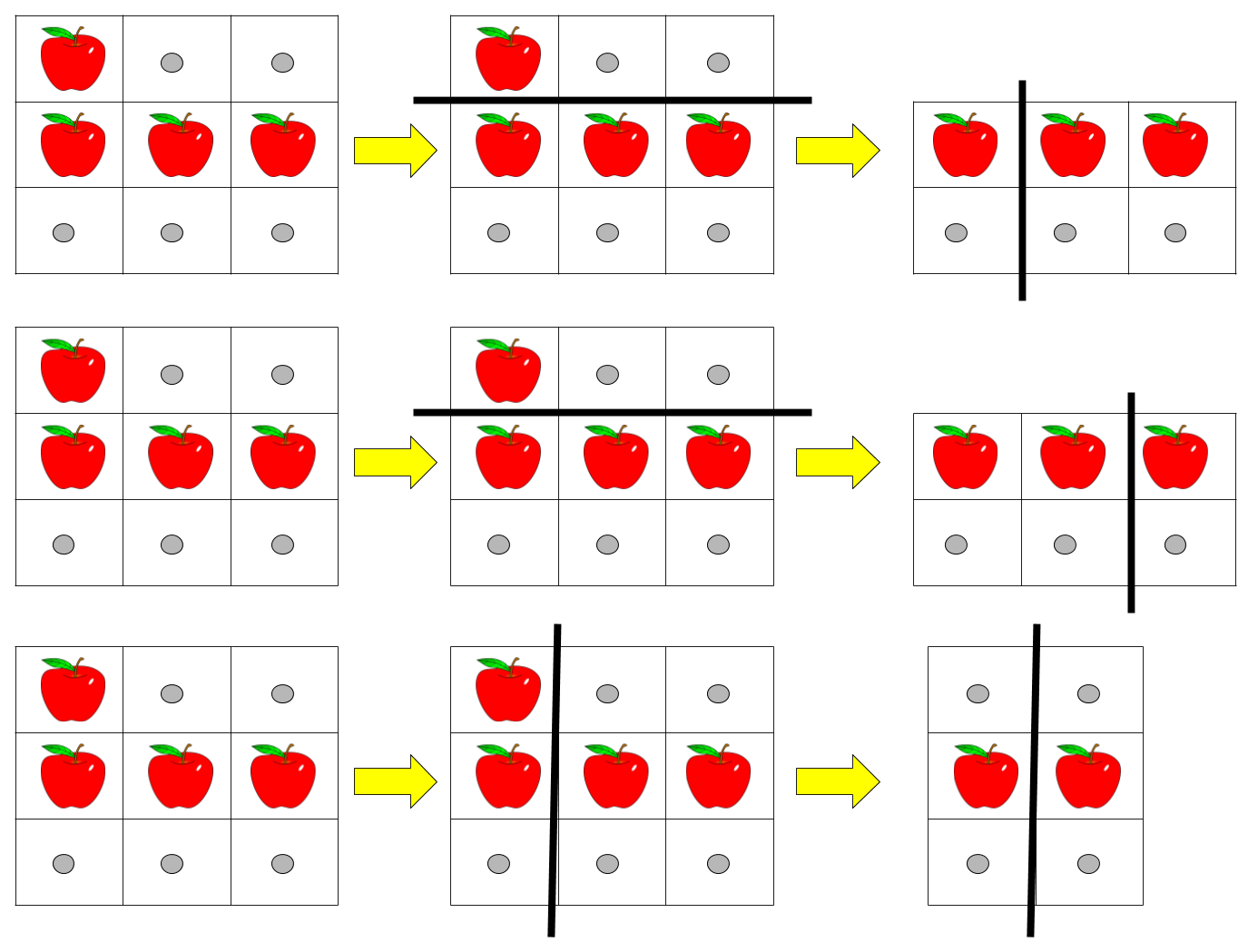
number-of-ways-of-cutting-a-pizza.png

Input: pizza = [“A…”,“AAA”,“…”], k = 3
Output: 3
Explanation: The figure above shows the three ways to cut the pizza. Note that pieces must contain at least one apple.

Example 2:

Input: pizza = [“A…”,“AA.”,“…”], k = 3
Output: 1

Example 3:

Input: pizza = [“A…”,“A…”,“…”], k = 1
Output: 1
Read more

Reducing Dishes

A chef has collected data on the satisfaction level of this n dishes. Chef can cook any dish in 1 unit of time.

Like-time coefficient of a dish is defined as the time taken to cook that dish including previous dishes multiplied by its satisfaction level i.e. time[i] * satisfaction[i].

Return the maximum sum of like-time coefficient that the chef can obtain after preparing some amount of dishes.

Dishes can be prepared in any order and the chef can discard some dishes to get this maximum value.

一个厨师收集了他n道菜的满意程度satisfaction,这个厨师做出每道菜的时间都是1单位时间。

一道菜的like-time系数定义为烹饪这道菜结束的时间(包含之前每道菜所花费的时间)乘以这道菜的满意程度,也就是time[i] * satisfaction[i]

返回厨师在准备了一定数量的菜肴后可以获得的最大 like-time系数总和。

你可以按 任意 顺序安排做菜的顺序,你也可以选择放弃做某些菜来获得更大的总和。

Example 1:

Input: satisfaction = [-1,-8,0,5,-9]
Output: 14
Explanation: After Removing the second and last dish, the maximum total like-time coefficient will be equal to (-11 + 02 + 5*3 = 14).
Each dish is prepared in one unit of time.

Example 2:

Input: satisfaction = [4,3,2]
Output: 20
Explanation: Dishes can be prepared in any order, (21 + 32 + 4*3 = 20)

Example 3:

Input: satisfaction = [-1,-4,-5]
Output: 0
Explanation: People do not like the dishes. No dish is prepared.

Read more

Russian Doll Envelopes

You are given a 2D array of integers envelopes where envelopes[i] = [wi, hi] represents the width and the height of an envelope.

One envelope can fit into another if and only if both the width and height of one envelope are greater than the other envelope’s width and height.

Return the maximum number of envelopes you can Russin doll (i.e., put one inside the other).

Note: You cannot rotate an envelope.

给你一个二维数组envelopes,其中envelopes[i] = [wi, hi], 表示第i个信封的宽度和高度。

当另一个信封的宽度和高度都比这个信封大的时候,这个信封就可以放进另一个信封里,如同俄罗斯套娃一样。

请计算最多能有多少个信封能组成一组**"俄罗斯套娃“**信封(即可以把一个信封放到另一个信封里面)。

Example 1:
Input: envelopes = [[5,4],[6,4],[6,7],[2,3]]
Output: 3
Explanation: The maximum number of envelopes you can Russian doll is 3 ([2,3] => [5,4] => [6,7]).

Example 2:
Input: envelopes = [[1,1],[1,1],[1,1]]
Output: 1

Read more

Shortest Path Visiting all Nodes

You have an undirected, connected graph of n nodes labeled from 0 to n - 1. You are given an array graph where graph[i] is a list of all the nodes connected with node i by an edge.

Return the length of the shortest path that visits every node. You may start and stop at any node, you may revisit nodes multiple times, and you may reuse edges.

Example 1:

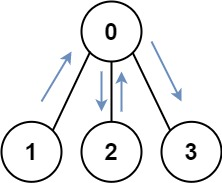
shortest-path-visiting-all-nodes-1.png

Input: graph = [[1,2,3],[0],[0],[0]]
Output: 4
Explanation: One possible path is [1,0,2,0,3]

Example 2:

shortest-path-visiting-all-nodes-1.png

Input: graph = [[1],[0,2,4],[1,3,4],[2],[1,2]]
Output: 4
Explanation: One possible path is [0,1,4,2,3]

Read more

Trapping Rain Water

Given n non-negative integers representing an elevation map where the width of each bar is 1, compute how much water it can trap after raining.

给定n个非负整数表示每个宽度为1的柱子的高度图,计算按此排列的柱子,下雨之后能接多少雨水。

trapping_rain_water.png

Read more